About energy types
One of the important concepts in energy management is "energy type."
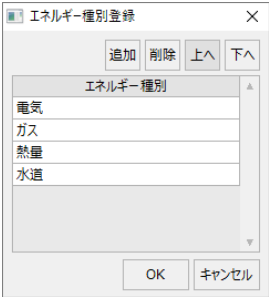
Energy type refers to the type of energy whose usage is to be measured. Typical examples include "electricity," "gas," "water," and "heavy oil." These types must be registered in advance as master information.
(Energy type registration screen)
The energy type registered above will be referenced from the conversion factor and point group registration screens, etc.
Energy management conversion process
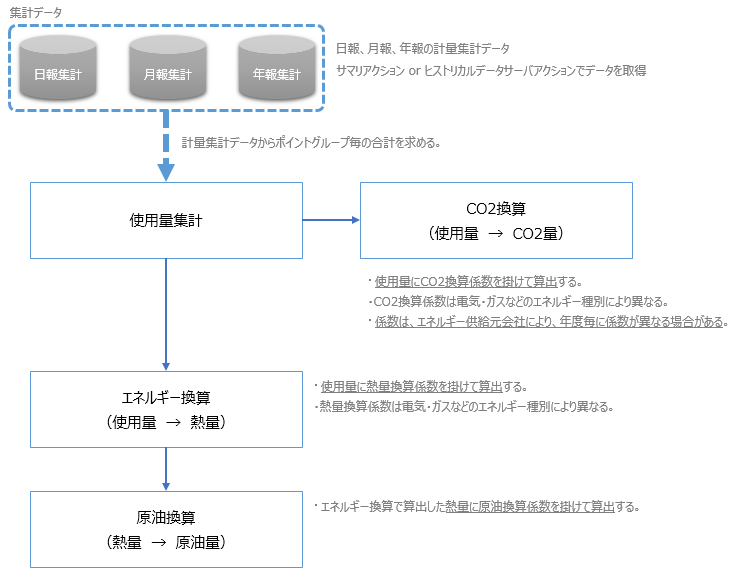
Among the energy management graph types, in order to display the "CO2 conversion graph," "energy conversion graph," and "crude oil conversion graph," it is necessary to convert the amount of consumption into the desired unit before displaying it.
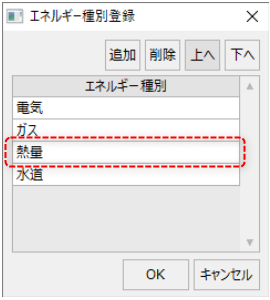
In this conversion process, the amount used before conversion is multiplied by a "conversion coefficient" for each energy type. In particular, in the case of crude oil conversion, in order to convert the amount used of energy types such as electricity and gas into the amount of crude oil, a two-stage conversion is required: first, the amount is converted into "calorie" units, and then the "calorie" is converted back to "amount of crude oil." In this first stage of conversion, the energy type known as "calorie" is used. Therefore,When registering the master data for energy types, you must register a type called "heat" (unit: J (joules)) in addition to the types of energy actually consumed, such as electricity, gas, and water..
(Energy type registration screen: "Heat")
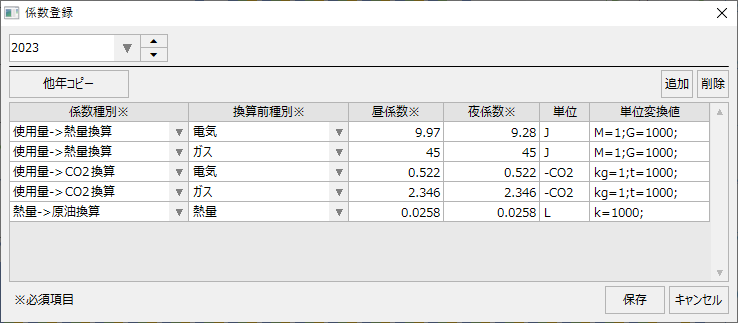
In addition, some energy types have conversion factors that vary from year to year. For example, the conversion factor from electricity to CO2 is data published by electric power companies and is calculated based on statistics on the amount of CO2 generated to generate electricity, so it may change every year. Therefore, the master registration of conversion factors must be registered on an annual basis.
(Coefficient registration screen)
The diagram below shows the flow of the conversion process.