Connection settings for your own project's Panel Server (login-related route properties)
This section explains how to set the route properties related to login when executing an original project in file distribution format.
The following are route properties related to server connection settings. Please set them appropriately according to your operating environment.
Property Name |
Setting contents |
explanation |
How to connect
|
Normally set to AUTO. |
Specify the login method when the system starts. Normally, leave it set to AUTO. If you are creating your own login control with a script, set it appropriately according to the operation. For details, see "Example of property settings when executing your own project in file distribution format" below. |
Do not start the system until you have logged in (PSLoginMust)
|
Usually set to False. |
Set whether or not login is required. Normally, set this to False. For details, see "Example of property settings when executing an original project in file distribution format" below. If you want to switch users by logging out during system operation (logging in again as a different user), set this property to True. For details, see "Switching logged-in users during operation" in Creating your own project. |
Server duplication settings (PSNodeRedundancy) |
Set True only for duplication |
If you want to operate the server in a duplicated configuration, set this to True. For details about server duplication, see "Operation with server duplication" in System Configuration and Operation (Runtime Execution). |
Connect to (PSNode) |
Server IP address |
Specify the IP address of the destination server. If you run Panel Server and Panel Browser on different PCs, you must specify the IP address or node name of the server. If you run them on the same PC, you can leave this blank.
Please note that there are some points to keep in mind when setting multiple IP addresses on one PC, such as when using multiple network cards. For details, please refer to "Points to note when running Panel Server and Panel Browser on one PC" in the Panel-Interface settings.
|
Connection 2 (PSNode2) |
Server IP address (redundant sub-side) |
Specify the IP address of the secondary server of the duplication. Specify this only when the server is in a duplication configuration.
|
port (PSPort) |
Destination server port number |
Specify the port number of the destination server. The default port number is 6001. This must match the port number set in the basic settings of Panel-Interface. |
Port 2 (PSPort2) |
Port number of the destination server (redundant sub-side) |
Specify the port number of the secondary server in the duplication. Specify this only if the server is in a duplication configuration. |
User (PSLoginUser) |
Logged-in user |
Specify the user name used to log in at startup. Specify the user name registered in user management. For original projects, "user" is set by default. For details, see "Example of property settings when executing original project in file distribution format" below. |
password (PSLoginPwd) |
Login Password |
You can specify the password to be used when logging in as above. For original projects, "pass" is set by default. If you set this password together with the login user, the user will be automatically logged in at startup. For details, see "Example of property settings when running an original project in file distribution format" below. |
Example of property settings when executing your own project in file distribution format
When you run your own project in file distribution format, login will be performed based on the settings of the "PSLoginStartup", "PSLoginMust", "PSLoginUser" and "PSLoginPwd" root properties. Please set the appropriate settings according to the needs of the system you are introducing, such as if you want to automatically log in without having to think about logging in at startup, or if you want to require password input every time you start the system.
Below are examples of expected operation methods and property settings.
How it works |
Summary of execution method and settings |
supplement |
||
Operation with automatic login
Security strength: Low
overview: This is the setting if you want to log in automatically. By setting it as shown on the right, the login screen will not be displayed and you will be logged in automatically.
|
•From Panel Editor, set the following route properties.
PSLoginStartup ・・AUTO PSLoginMust ・・False PSLoginUser: Automatic login user name PSLoginPwd: Automatic login password
•Use the setup function of Panel Editor to perform the setup process for the file distribution format and place it on each client. •Open and run the client configuration file from Panel Browser.
|
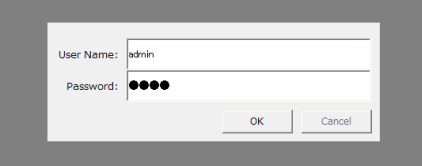
•If user information is changed after operation starts, automatic login will fail and the following login screen will be displayed.
•If you enter the correct user information above, you will be able to log in, but subsequent login attempts will fail until you correct the route property listed above.
|
||
Require a password every time you start the program
Security strength: High
overview: This is a setting example for when you want to strictly protect security by logging in. By setting it as shown on the right, the login screen will be displayed every time the system starts, and you will not be able to use the system until you successfully log in.
|
•From Panel Editor, set the following route properties.
PSLoginStartup ・・MANUAL PSLoginMust ・・True PSLoginUser - Do not set (blank) PSLoginPwd - Do not set (blank)
•The setup function of Panel Editor performs the setup process for the file distribution format and places a set of folders on each client. •Open and run the client configuration file from Panel Browser.
|
•When you start the program, the following login screen will be displayed every time. Enter your username and password to log in.
|

(Explanation)About PSLoginMust and PSLoginStartup properties
The login method for your own project is determined by a combination of the PSLoginMust route property and the PSLoginStartup route property.
The PSLoginMust root property (True/False) controls whether the system can start even if the user is not logged in. True means that login is required, andIf the login fails, the login screen will be displayed.If False, logging in is not required. To log in, Panel Server must be running online on another PC on the same network, or on the same PC as Panel Browser. If Panel Server is not running online, or if the user name or password is incorrect, logging in will fail. If logging in fails and this setting is True, the form will not be displayed. If False, the form will be displayed even if there is no connection to Panel Server (however, values such as tags will not be displayed as server information cannot be obtained). In addition,If this property is set to False and communication with Panel Server is not possible for some reason after login is complete, automatic retries will be performed until Panel Server is found. Once Panel Server is found, re-authentication will be performed, and if successful, login will be attempted, but if failed, retries will end.
The PSLoginStartup root property (NONE/AUTO/MANUAL) selects how login occurs when the system starts.Setting this property to AUTOThe login screen will not be displayed, and the user will automatically log in using the user name and password set in the PSLoginUser root property / PSLoginPwd root property. When MANUAL is set, the login screen will be displayed and the operator will log in by entering the user name and password.
Below is a table showing the correspondence between the PSLoginMust root property and the PSLoginStartup root property. For details on each property, see "Root Properties" in the Control Reference.
PSLoginMust |
PSLoginStartup |
Commentary |
True |
NONE
|
This setting is not normally done. The behavior will be the same as if the PSLoginStartup route property was set to MANUAL. |
AUTO
|
This is the automatic login setting. The login screen will not be displayed, and you will be automatically logged in using the username and password set in the PSLoginUser and PSLoginPwd root properties. If login fails, the login screen will be displayed. |
|
MANUAL
|
This is a manual login setting. The login screen will be displayed when the system starts. You will not be able to use the system until you successfully log in. |
|
False |
NONE
|
When the system starts, the login screen is not displayed, and the client screen is displayed without logging in (in this state, there is no connection to Panel Server and the Panel Browser is operating alone). |
AUTO
|
This is the automatic login setting. The login screen will not be displayed, and you will automatically log in with the username and password set in the PSLoginUser and PSLoginPwd root properties. If login fails, the client screen will be displayed without logging in, and will automatically connect when Panel Server is started later (the Panel Browser will operate alone for a time, and when Panel Server is started later, a connection will be established automatically). |
|
MANUAL
|
This is a manual login setting. The login screen is displayed when the system starts, and you can log in by performing the login operation from the screen. If the login fails, the client screen will be displayed without logging in (the Panel Browser will operate alone for a while, and when Panel Server starts later, the connection will be established automatically). |
|
The standard project has its own built-in login/logout mechanism, so there is no need to set the above properties. |
